
How Do Lawyers Get Traffic Tickets Dismissed in Washington?
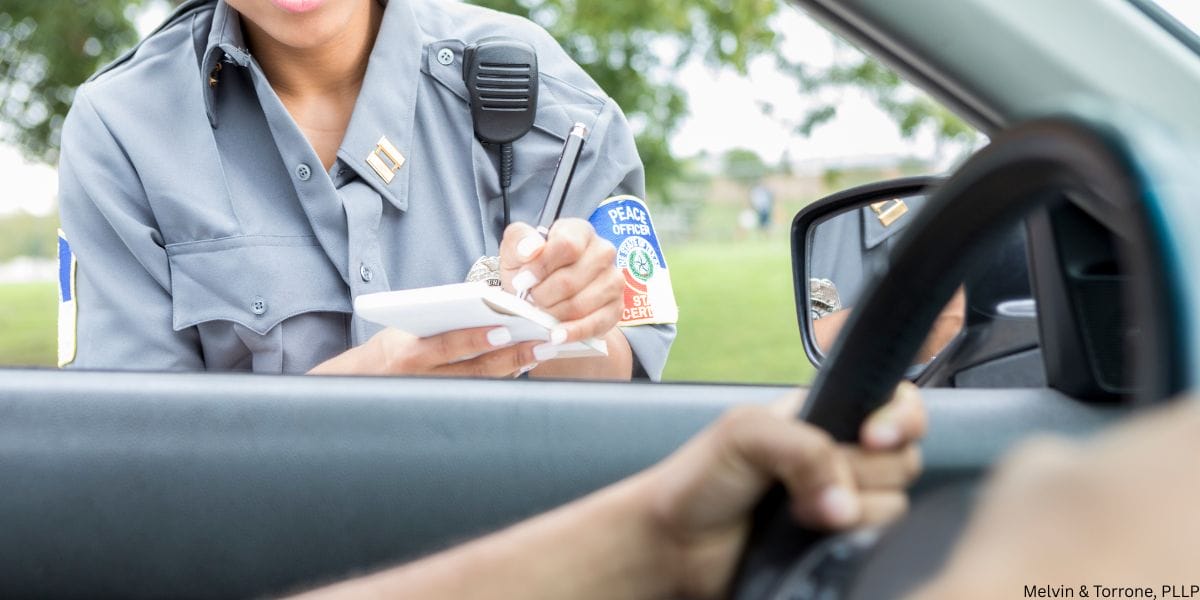
Lawyers get traffic tickets dismissed in Washington by challenging radar calibration records, exposing procedural errors on citations, and proving officers lacked reasonable suspicion for the stop. Most drivers don’t realize these defenses exist. They just pay the speeding ticket, watch their insurance rates spike, and accept points on their driving record. I’ve spent two decades fighting traffic infractions in Pierce County courts, and I can tell you this: that citation isn’t as ironclad as it looks.
The citation can be challenged. What matters is knowing which weakness to attack.
Torrone’s Takeaways
-
Washington traffic tickets contain technical errors judges must dismiss when we point them out
-
Radar calibration records expire every 60 days, and most officers skip the documentation requirements
-
Insurance rates spike $500 annually for three years after a single speeding ticket conviction
-
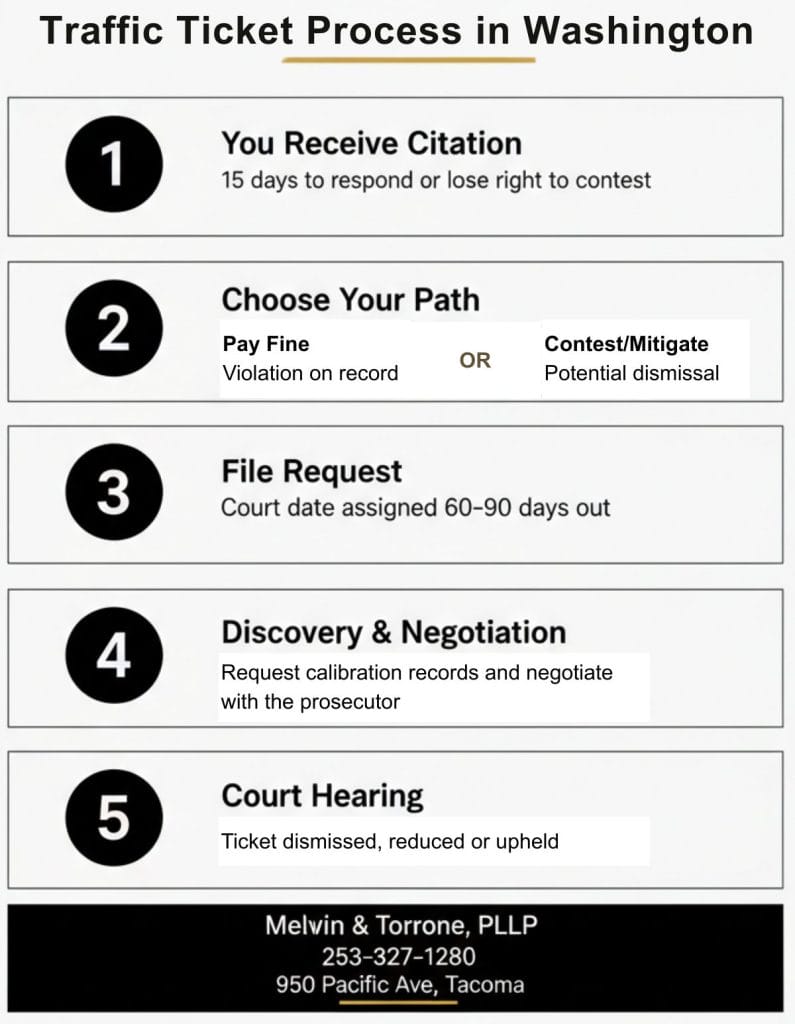
You have only 15 days from your citation date to request a contested hearing
-
Mitigation hearings reduce fines but still put violations on your driving record permanently
-
CDL holders face federal disqualification rules that make every traffic ticket a career threat
-
Free consultations reveal whether fighting your ticket saves more money than just paying it
Table of Contents
- Washington Traffic Tickets Are Easier to Fight Than You Think
- What Happens When You Contest a Traffic Ticket in Pierce County
- Common Traffic Tickets in Tacoma and How Lawyers Beat Them
- Legal Defenses That Get Traffic Tickets Dismissed in Washington
- How to Prepare for a Traffic Mitigation Hearing
- Special Situations That Change Everything About Your Traffic Ticket
- When Hiring a Traffic Lawyer Pays for Itself
- How Melvin & Torrone Gets Traffic Tickets Dismissed in Pierce County
- Frequently Asked Questions
- Conclusion
Washington Traffic Tickets Are Easier to Fight Than You Think
Technical Errors That Judges Cannot Ignore
Your citation needs to comply with RCW 46.63.070 filing requirements. Officers routinely miss deadlines, misspell your name, record wrong license plate numbers, or cite incorrect court jurisdictions. I once had a speeding ticket dismissed because the officer wrote “Tacoma Municipal Court” when the violation occurred in Lakewood’s jurisdiction. The prosecutor couldn’t fix it at the hearing.
One procedural error means your ticket gets tossed, and there’s nothing the court can do about it. We review every citation for these flaws before your court date. Washington State Patrol issued 280,148 traffic infractions in 2024, up from 197,090 in 2022, and most of those tickets contain at least one technical flaw worth challenging.
Equipment Calibration Requirements Most Officers Skip
Radar equipment must be calibrated every 60 days under Washington law. Lidar devices need annual certification. Officers should maintain calibration records, training records, and maintenance logs for every speed measurement device they use. Most don’t. We request these documents during discovery, and you’d be shocked how often the calibration checks weren’t done or the certificates expired months ago.
These requests change outcomes. On a $350 SR-16 speeding violation, a calibration-records request can reveal a radar device that has not been certified in four months, well past Washington’s 60-day requirement, which is grounds for the judge to dismiss the ticket on the spot and spare the driver the insurance increase and the mark on their record.
The Reasonable Suspicion Standard Police Must Meet
Police need reasonable suspicion that you violated a specific traffic law before pulling you over. “The car looked suspicious” doesn’t cut it. Vague observations like “weaving within your lane” or “following the speed of traffic” aren’t legal grounds for a traffic stop. We challenge stops where officers cite reasons that don’t match actual RCW violations. If the initial stop was illegal, everything that followed gets suppressed. I’ve seen tickets dismissed because the officer admitted he pulled someone over for an air freshener hanging from the rearview mirror, then wrote a speeding citation after running the license plate.
What Happens When You Contest a Traffic Ticket in Pierce County
Tacoma Municipal Court vs. District Court Procedures
Your citation tells you which court handles your case. Tacoma Municipal Court at 930 Tacoma Ave S (phone 253-591-5860) processes violations within Tacoma city limits. Pierce County District Court at 930 Tacoma Ave S, Room 239 (phone 253-798-7487) handles tickets from unincorporated areas and smaller cities like Lakewood, Puyallup, and Gig Harbor. Filing fees run $200-250 depending on your violation. Both courts now offer online dispute options through their websites.
The Timeline From Filing to Resolution
You have 15 days from your ticket date to request a hearing. Miss that window and you lose your right to contest. Once you file, the court assigns a court date typically 60-90 days out. We use that discovery period to request calibration records, officer training records, and dashcam footage. The discovery period is where cases are won. On a cell-phone citation, requesting a contested hearing within the deadline and then gathering evidence of hands-free Bluetooth use can lead the prosecutor to drop the charge before trial.
Mitigation Hearing vs. Contested Hearing Explained
These two options serve completely different purposes. At a mitigation hearing, you admit the violation happened but ask the judge to reduce your fine. Mitigation reduces fines in 65-70% of cases for first offenders. At a contested hearing, you plead not guilty and force the prosecutor to prove every element of the traffic offense. The judge can dismiss your ticket entirely if the evidence falls short.
Mitigation Hearing
-
You admit guilt
-
Judge may reduce fine by 25-50%
-
Violation stays on your record
-
Insurance rates still increase
Contested Hearing
-
You plead not guilty
-
Ticket can be dismissed completely
-
Nothing goes on your record if you win
-
Attorney recommended for serious violations
Common Traffic Tickets in Tacoma and How Lawyers Beat Them
Speeding Tickets on I-5 and SR-16 Corridors
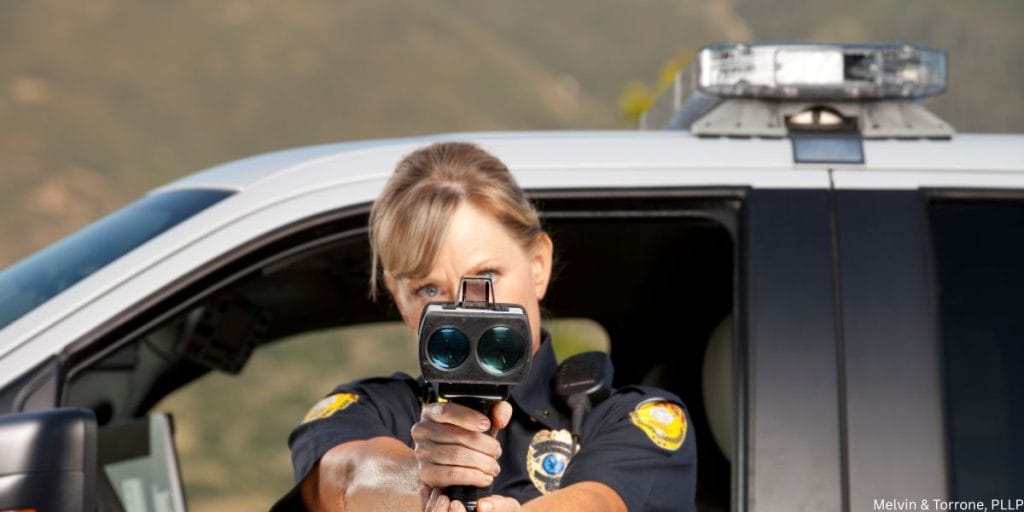
I-5 through Tacoma and SR-16 near the Narrows Bridge are notorious speed trap locations. Officers sit on Pacific Avenue during rush hour and clock dozens of drivers daily. We challenge speeding tickets by requesting radar calibration records and questioning the pacing method officers use.
Radar detection defenses work when maintenance logs show gaps in equipment testing. Pacing method challenges succeed when we prove the officer’s speedometer wasn’t recently calibrated or the officer lost visual contact during the pursuit. Tacoma recorded 35 fatal crashes in 2023, the highest in nearly a decade, which explains why enforcement has intensified across Pierce County.
Red Light and Speed Camera Citations
Tacoma operates red light cameras at several intersections throughout the city. Yellow light timing must meet specific standards under Washington law. Traffic signals should display yellow for 3.0 to 6.0 seconds depending on the posted speed limit. We request calibration records and traffic engineer reports for every camera ticket.
Red light camera citations turn on the engineering. Obtaining the camera footage and having a traffic engineer analyze the yellow-light duration can show the light stayed yellow only 2.8 seconds in a 35 mph zone, short of the state standard, which is grounds for dismissal.
School Zone and Cell Phone Violations
School zone violations carry double the normal fines under Washington law. Cell phone use violations fall under RCW 46.61.672 and can cost you $136 for a first offense. We defend these cases by proving emergency calls, demonstrating hands-free technology was in use, or showing the officer misidentified what you were holding. School zone tickets often get dismissed when we prove the flashing lights weren’t activated or the violation occurred outside school hours. I’ve negotiated hundreds of cell phone citations down to non-moving violations that don’t affect your driving record or insurance rates.
Legal Defenses That Get Traffic Tickets Dismissed in Washington
Challenging Speed Measurement Device Accuracy
We request calibration certificates for every radar gun and lidar device used in your traffic stop. NHTSA standards require specific testing protocols that most departments ignore, and tuning fork tests must be documented before and after every shift. When a discovery request turns up a radar device that has not been certified in 90 days, past Washington’s 60-day requirement, the judge can dismiss the speeding violation outright, saving the driver the fine and three years of increased insurance rates.
Proving Procedural Violations on the Citation
Traffic citations must include complete information under RCW 46.63.070. Missing details like incorrect court jurisdiction, wrong vehicle description, or unsigned officer statements give us grounds for dismissal. Officers who fail to appear at your court date automatically lose. Improper service of notice means the citation never legally existed. Washington’s statute of limitations gives prosecutors one year to file traffic infractions. We’ve had dozens of tickets dismissed because the officer wrote the wrong court address or forgot to sign the citation. The clerk’s office can’t fix these procedural errors after the fact.
Demonstrating Lack of Reasonable Suspicion
Police need specific, articulable facts to justify pulling you over. Anonymous tips alone don’t meet the reasonable suspicion standard under Washington law. Vague descriptions like “driving erratically” or “looked suspicious” aren’t enough. We review police reports looking for officer admissions that reveal the stop lacked legal grounds. The arresting officer’s own words often prove our case.
Common Illegal Stop Scenarios We Challenge
-
Officer pulled you over for a non-existent equipment violation
-
Stop based solely on the neighborhood you were driving through
-
Officer admits he ran your license plate before observing any violation
-
Pretextual stops where the stated reason doesn’t match the real reason
How to Prepare for a Traffic Mitigation Hearing
What Pierce County Judges Want to Hear in Mitigation
Judges respond to specific language in mitigation hearings. Start by acknowledging the violation without making excuses. Emphasize your clean driving record and explain how this citation is out of character for you. Mitigation reduces fines in 65-70% of cases for first offenders with clean records. Hardship explanations that mention financial strain, medical bills, or supporting dependents carry real weight.
A sample statement might sound like this: “Your Honor, I’ve held a clean driving record for 12 years. This speeding ticket happened during a family emergency. I’m a single parent supporting two children, and the full fine would create significant hardship. I respectfully ask for a reduced penalty.”
Evidence and Documentation That Strengthens Your Case
Bring your driving record abstract from the Department of Licensing showing your clean history. Submit evidence supporting your explanation like maps showing confusing traffic signals, photos of faded speed limit signage, or witness statements from passengers. Character references from employers or community members help establish your credibility.
Proof of financial hardship like pay stubs, medical bills, or collection agency notices demonstrates why the full fine amount would be unreasonable. A driver who brings a DOL abstract showing 15 years without violations plus a character letter from an employer gives the judge concrete grounds to reduce a fine substantially, in some cases from $350 to around $125.
When Mitigation Makes Sense vs. Fighting the Ticket Completely
Mitigation works best for first offenses with clean records and minor violations. If you have a valid defense or the ticket contains errors, fight it completely through a contested hearing. Mitigation still puts the violation on your driving record, which means your insurance rates increase for three to five years. A contested hearing win keeps your record clean. Consider the long-term insurance impact before choosing mitigation. Traffic tickets can increase your insurance costs by approximately $500 annually for three years. Saving $150 on the fine today might cost you $1,500 in higher premiums tomorrow.
Table: Mitigation Hearing vs. Contested Hearing Decision Guide
| Factor | Mitigation Hearing | Contested Hearing |
|---|---|---|
| Your Plea | Admit guilt | Plead not guilty |
| Goal | Reduce fine amount | Dismiss ticket completely |
| Best For | First offense, clean record, minor violation | Valid defense, technical errors, serious charges |
| Success Rate | 65-70% get reduced fines | Varies by case strength (20-60%) |
| Impact on Record | Violation stays on record | Nothing on record if dismissed |
| Insurance Effect | Rates still increase | No increase if ticket dismissed |
| Court Appearance | Required (15-20 minutes) | Optional if you hire attorney |
| Attorney Needed? | No (handle yourself) | Recommended for serious violations |
| Time to Resolution | Same day as hearing | 60-90 days from filing |
| Typical Fine Reduction | 25-50% off original fine | $0 if dismissed, full fine if convicted |
| When to Choose | Minor ticket + clean record + need quick resolution | CDL at risk, multiple violations, or strong defense exists |
Special Situations That Change Everything About Your Traffic Ticket
CDL Holders Face Career-Ending Consequences
Commercial driver’s license holders face federal disqualification rules that don’t apply to regular drivers. Two serious traffic violations within three years triggers a 60-day CDL disqualification. Three violations mean 120 days off the road. Out-of-service violations can end your career permanently. I tell every CDL holder the same thing: never just pay a traffic ticket.
What seems like a minor speeding violation to a regular driver can cost you your livelihood. We fight every citation CDL holders receive because your commercial driving privileges are too valuable to risk. Even a conviction for a relatively minor traffic offense on your personal vehicle goes on your CDL record.
Young Drivers and Intermediate License Holders
Drivers under 21 with intermediate licenses face enhanced restrictions in Washington. Any traffic violation during your intermediate license period can trigger additional penalties. The Department of Licensing may extend your intermediate license period by six months for moving violations. License suspension thresholds are lower for young drivers. Your parents receive automatic notification of any traffic citation.
For a young driver on an intermediate license, a single cell-phone citation can trigger a license-period extension and mandatory parental notification. Contesting it by proving voice-activated GPS use rather than holding the phone can get the ticket dismissed, keeping the intermediate license clean and those added restrictions off the table.
Out-of-State Tickets and Department of Licensing Holds
Washington participates in the Interstate Driver’s License Compact, which means out-of-state tickets affect your Washington driving record. The Department of Licensing receives notification of violations from 45 states. Unpaid tickets from other states trigger DOL holds that prevent license renewal.
You can’t register your vehicle until you clear these holds. DOL suspension procedures start automatically once another state reports your violation. We help clients resolve out-of-state tickets before they cascade into Washington license problems. I’ve seen people discover they can’t renew their license because of a parking ticket from a road trip three years ago.
When Hiring a Traffic Lawyer Pays for Itself
Calculate the True Cost of Just Paying Your Ticket
The fine on your citation is just the beginning. Washington drivers with a speeding ticket pay $2,296 annually for car insurance compared to $1,608 for drivers with clean records. Insurance rates increase at least 20% for three years following most traffic violations. Add license suspension costs like SR-22 filing fees, reinstatement fees averaging $75-$150, and lost wages from multiple court appearances.
On a reckless driving citation with a $550 base fine, negotiating the charge down to negligent driving, a non-moving violation, avoids the reckless-driving conviction that can raise insurance premiums by roughly $800 a year. Over three years that is about $2,400 in insurance costs alone, before counting the points kept off the driving record.
What a Traffic Attorney Actually Does for You
We review your citation for technical weaknesses the moment you hire us. Discovery requests go out immediately for calibration records, maintenance logs, officer training records, and dashcam footage. We negotiate with the prosecutor before your court date, often getting charges reduced or dismissed without you ever appearing. Representation at contested hearings means you don’t miss work for court appearances.
Our goal is keeping violations off your record entirely so your insurance rates stay unchanged. I’ve spent two decades learning which prosecutors will negotiate and which judges require specific evidence standards. That knowledge saves you time, money, and stress.
Minor Ticket vs. Serious Violation Decision Guide
Go solo if this is your first offense, the violation is minor speeding under 10 mph over the limit, you have a clean driving record, and you feel comfortable with court procedures. Hire a traffic attorney if you’re facing reckless driving charges, you have multiple violations on your record, your CDL is at risk, or you have prior traffic offenses that make this citation more serious.
Gray area situations where a free consultation makes sense include any violation that carries more than two points, tickets that occurred in construction zones or school zones with enhanced penalties, or situations where you’re unsure about the long-term insurance impact. A single consultation can clarify whether fighting makes financial sense.
Table: Pierce County Traffic Violation Costs and Insurance Impact
| Violation Type | Base Fine | Insurance Increase (Annual) | 3-Year Total Cost | Points on License | Best Defense Strategy |
|---|---|---|---|---|---|
| Speeding (1-10 mph over) | $136-$192 | $300-$400 | $1,036-$1,392 | 3 | Challenge radar calibration records |
| Speeding (11-20 mph over) | $192-$242 | $500-$700 | $1,692-$2,342 | 4 | Request tuning fork test documentation |
| Reckless Driving | $550+ | $800-$1,200 | $2,950-$4,150 | 6 | Negotiate reduction to negligent driving |
| Running Red Light | $136 | $400-$600 | $1,336-$1,936 | 4 | Challenge yellow light timing standards |
| Cell Phone Violation | $136 | $300-$500 | $1,036-$1,636 | 0 | Prove hands-free use or emergency call |
| School Zone Speeding | $272-$384 (double) | $600-$800 | $2,072-$2,784 | 3 | Challenge flashing light activation |
| Following Too Close | $136 | $400-$550 | $1,336-$1,786 | 3 | Question officer’s distance measurement method |
How Melvin & Torrone Gets Traffic Tickets Dismissed in Pierce County
Decades of Experience with Tacoma and Pierce County Courts
Our attorney Jordan Foster leads our traffic defense work across Pierce County. We’ve built established relationships with prosecutors at Tacoma Municipal Court and Pierce County District Court over years of practice. Our legal team knows which judges require specific evidence standards and which prosecutors will negotiate before trial. We cover Tacoma, Lakewood, Puyallup, Gig Harbor, and every South Sound community where you might receive a traffic citation. That local knowledge makes the difference between a dismissal and a conviction on your driving record.
Our Process for Fighting Your Traffic Ticket
We start with a free consultation to evaluate the strengths and weaknesses of your case. No pressure, just honest legal advice about your options. Once you hire us, we immediately file your contested hearing request to preserve your right to fight the citation. Our comprehensive discovery process requests calibration records, officer notes, maintenance logs, and dashcam footage that reveal defense opportunities.
We negotiate aggressively with prosecutors for dismissal or charge reduction before your court date. You never miss work for court appearances because we handle the courtroom representation. Most clients never set foot in traffic court.
Why Pierce County Residents Choose Our Traffic Defense Team
We focus on the defenses that protect your record: pursuing dismissals where calibration records show gaps, reductions of reckless-driving charges to non-moving violations, and challenges to red light camera citations on yellow-light timing. Our fee structure is transparent from the start, with no hidden court costs or surprise bills, and we explain the legal process in plain language, not confusing legal jargon.
You’re known by your name at our Tacoma office at 950 Pacific Ave, not treated like case number. We protect your driving record and keep your insurance rates from spiking. Call us at 253-327-1280 or schedule online for your free consultation.
Frequently Asked Questions
1. How long do I have to contest a traffic ticket in Washington?
You have 15 days from the date on your citation to request a contested hearing or mitigation hearing. Missing this deadline means you automatically admit guilt and lose your right to fight the ticket. We recommend filing your request within the first week to preserve all your legal options.
2. Will hiring a traffic lawyer cost more than just paying the ticket?
The ticket fine is only part of the cost. Insurance rate increases average $500 annually for three years after a traffic violation. A lawyer who gets your ticket dismissed saves you thousands in insurance premiums while keeping your driving record clean. We often pay for ourselves many times over.
3. Can I get a speeding ticket dismissed if I was actually speeding?
Yes. We challenge how the speed was measured, not whether you were speeding. Radar calibration gaps, improper officer training, and equipment maintenance failures create legal defenses. Technical violations of procedure require dismissal regardless of whether you were actually speeding. The prosecutor must prove every element perfectly.
4. What happens if the officer doesn’t show up to my contested hearing?
The judge dismisses your ticket automatically. Officers who fail to appear mean the prosecutor cannot prove their case. We’ve seen hundreds of dismissals because officers retired, changed departments, or simply forgot the court date. This happens more often than you’d expect in traffic court.
5. Do traffic tickets in Washington affect my out-of-state driver’s license?
Yes, through the Interstate Driver’s License Compact. Washington reports convictions to 45 participating states. Your home state will add the violation to your driving record and may increase your insurance rates. Fighting the ticket in Washington protects your license regardless of where you live.
6. How does a reckless driving charge differ from a regular speeding ticket?
Reckless driving is a criminal offense, not just a traffic infraction. It carries up to 364 days in jail, $5,000 in fines, and a permanent criminal record. Insurance companies treat reckless driving convictions much more seriously than speeding violations. We always fight reckless driving charges aggressively because the consequences follow you for life.
7. Can I fight a red light camera ticket in Tacoma?
Absolutely. We request traffic camera footage, yellow light timing data, and calibration records for the automated system. Washington law requires specific yellow light durations based on speed limits. Many camera tickets get dismissed when the timing doesn’t meet legal standards or the camera malfunctioned.
Conclusion
Traffic tickets aren’t as final as they look on paper. Technical errors, calibration gaps, and procedural violations create real paths to dismissal. I’ve spent two decades fighting citations in Pierce County courts, and I know which defenses work. Your driving record and insurance rates are too important to just accept a conviction. We review every ticket for free and build a personalized defense strategy.
Book your free consultation today.
Each case is unique. Past results do not guarantee future outcomes. This article provides legal information, not legal advice. Reading this article does not create an attorney-client relationship with Melvin & Torrone, PLLP.

Chris Torrone
Founding Partner, Melvin & Torrone PLLP
Chris Torrone is a dedicated advocate for clients facing family crises and criminal charges. With 20 years of experience practicing in Pierce County courts, Chris has built a reputation for meticulous case preparation and creative problem-solving in high-stakes litigation.